



When you need money quickly, going to traditional lenders can feel like a long and complicated process. You fill out mountains of paperwork, wait for days to hear back, and often face rejection if your credit history isn't perfect. But what if there was a simpler way? What if you could borrow money directly from regular people who have extra cash available? This is exactly what peer-to-peer lending, or P2P lending, offers you. P2P personal loans are faster, more flexible, and often more accessible than traditional loans.
What are P2P loans?
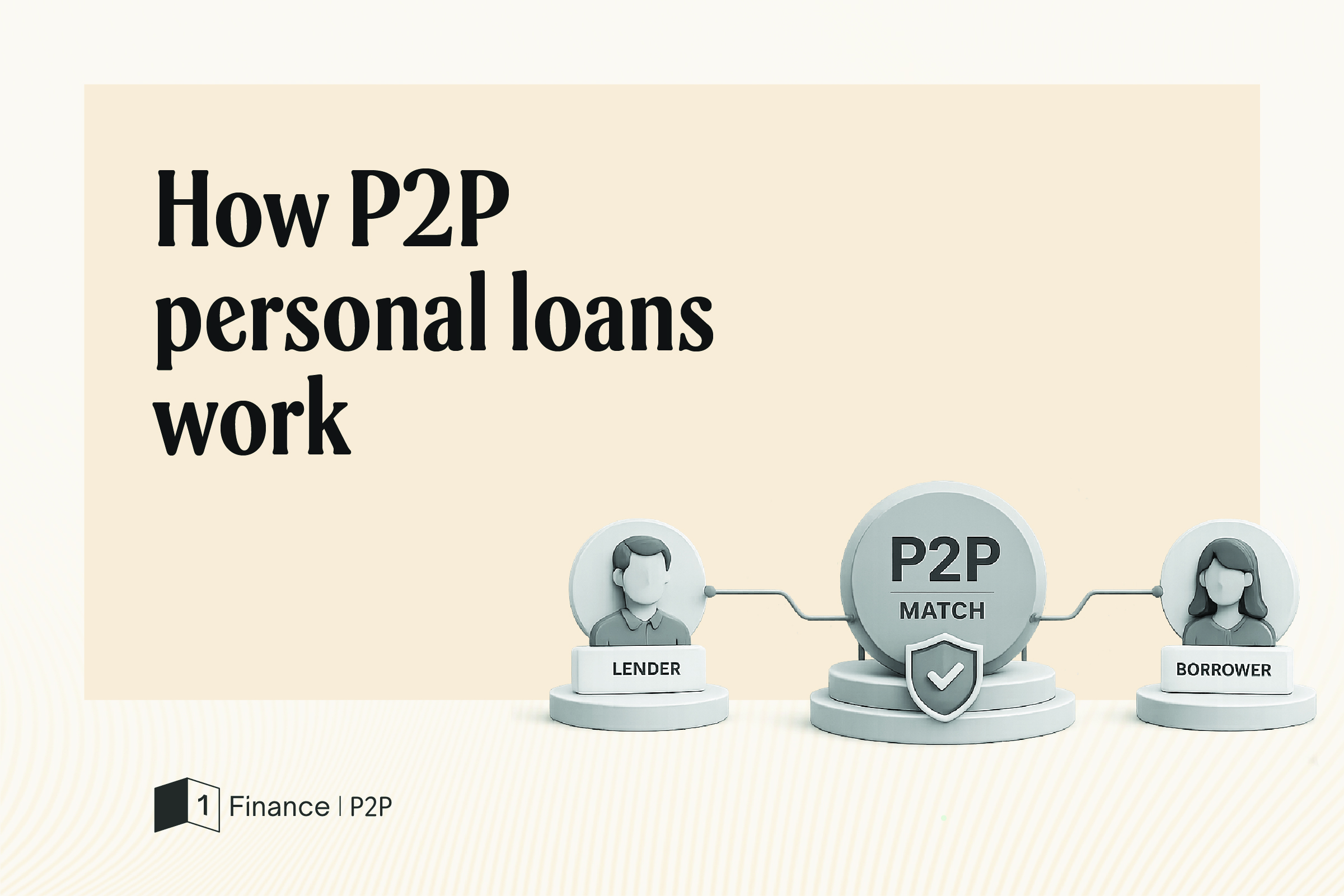
P2P loans are personal loans from individuals where you borrow directly from an everyday person via RBI-approved P2P lending companies in India. These platforms match borrowers who need unsecured personal loans and match them with lenders who have money to spare and want to earn some interest on it.
For example, imagine someone has ₹50,000 in her savings account earning minimal interest. She decides to lend this money to someone who needs it through an online platform. That borrower pays her back monthly with interest. Both people benefit: the lender earns better returns on her money, and the borrower gets the cash conveniently they need without the hassle of traditional lending process.
This isn't something new happening in dark corners of the internet. This is a regulated, transparent system that has been operating in India for years. It's becoming increasingly popular as a safe alternate financing to traditional loans.
Let’s understand how taking P2P personal loans in India works
The best thing about getting P2P personal loans in India is that it happens entirely online through dedicated P2P lending platforms. These platforms bring together people who have money and people who need money after thorough assessments.
Here's how the process typically works:
Step 1: Register on a RBI-approved P2P lending company
Both lenders and borrowers sign up on a P2P lending website or mobile app. When you register as a borrower, you provide basic information about yourself.
Step 2: The platform evaluates you
The platform performs a thorough evaluation that includes your employment history, income, credit history. This helps the platform understand who you really are as a borrower. Based on this evaluation, the P2P platform assigns you a risk rating.
If you are seen as a reliable borrower, you might get a lower interest rate. If there's more risk involved, the interest rate will be higher. And it also helps the platform to keep the P2P lending ecosystem safe.
Step 3: Multiple lenders fund your loan
Your loan doesn't have to come from just one lender. Multiple P2P lenders can contribute small amounts to fund your loan. One person might lend ₹5,000, another ₹10,000, and so on until your total loan amount is reached. Each lender can see your profile and decide whether they want to lend to you based on the platform's evaluation.
Step 4: You receive your personal loan
Once your demand is fully funded, you receive the personal loan in your bank account. The entire process can happen in just a few days.
Step 5: You pay back your loan
You make monthly payments back through the platform, which then distributes the money to your lenders. The platform charges a small fee for managing this entire process.
Why is borrowing from RBI-approved P2P lending companies better?
Several reasons make P2P lending attractive compared to traditional loans when it comes to personal loans:
Fast access to funds: Traditional loans can take weeks or months to process. P2P personal loans can often get approved and funded within days, or even hours in some cases. Loan approval time vary, depending on the platform.
Easier approval: Traditional lenders have strict credit requirements, making it difficult to qualify if your credit score isn't stellar or your employment history is unconventional; hence, they might reject you outright. P2P platforms assess your overall financial profile, considering income, repayment capacity, and more parameter, and often approve borrowers who might struggle to qualify elsewhere.
Lower documentation burden: You don't need to provide mountains of paperwork. Basic KYC and income documents, like PAN, Aadhaar, bank statements, and sometimes employment proof, are usually enough.
Transparent interest rates: With P2P personal loans, there are no hidden charges or surprise fees buried in the loan documents. You clearly see the interest rate and costs upfront before you accept the offer.
Flexible loan amounts: Whether you need ₹10,000 or ₹5 lakh, you can usually find a lending platform that offers P2P personal loans matching your required amount.
Is borrowing P2P personal loans safe?
Here's a common concern to have: Is P2P lending safe in India? Well the good news is that P2P lending in India is regulated by the Reserve Bank of India (RBI), the central bank that oversees all financial activities in the country.
Here's what makes taking P2P personal loans safe:
- RBI ensures that all P2P lending platforms follow strict rules. Platforms must obtain an NBFC-P2P (Non-Banking Financial Company - Peer-to-Peer) license from the RBI to operate legally in India.
- To operate, P2P platforms must maintain a minimum capital of ₹2 crore. This ensures that platforms are financially stable and capable of managing the money flowing through them.
- The platform doesn't hold your money or a lender's money in its own accounts; instead, transactions are routed through regulated escrow accounts maintained with a trustee or bank. It acts purely as an intermediary that connects people and ensures proper documentation and timely payments. Your money goes directly from lenders to borrowers and back again.
- Professional credit assessment happens on every borrower. The platform performs thorough checks before allowing someone to borrow, protecting both lenders and other borrowers.
- All transactions are recorded digitally with complete transparency. You can track every payment, see who is lending to you, and verify all terms in writing.
- RBI guidelines require platforms to have grievance redressal mechanisms. If something goes wrong, you have a clear process to address your complaint.
What should you check before applying for P2P personal loans?
If you decide to explore P2P lending, here are some important safety checks:
Confirm that the platform has a valid NBFC-P2P license from the RBI. You can confirm a platform's eligibilty by visiting RBI's Registered Non-Banking Financial Companies list.
Look for honest reviews from actual users on third-party websites and social media. Be suspicious if reviews are only positive or only negative.
Before applying for P2P loans, read the entire loan agreement carefully. Know the exact interest rate, repayment period, and any fees you'll have to pay.
Check the platform's physical address and contact details. Legitimate P2P lending platforms have real offices with verifiable addresses and phone numbers.
Make sure the platform has clear privacy policies and explains how your personal information will be protected.
If this is your first time borrowing online, consider starting with a smaller loan amount to get comfortable with the process.
Only take a loan for an amount you can comfortably repay from your regular income. Borrowing more than you can afford is the quickest way to finding yourself in financial trouble.
Conclusion
The rise of P2P lending represents a real shift in how everyday people can access money. Instead of being trapped by old traditional lending systems and rigid approval processes, ordinary individuals now have access to faster, more flexible borrowing options.
The key to taking P2P personal loans in India is to do it sensibly. Do your research, understand the terms, borrow responsibly, and choose a platform with proper RBI registration. When done right, P2P lending can be a genuine solution for people who need quick access to cash without the headaches of traditional lending processes.
Whether it's for an emergency, a wedding, home repairs, or a business venture, peer-to-peer lending offers ordinary people like you a practical alternative that actually works in today's digital world. It's time to explore this option and see how it could help you meet your financial needs.

Arman Qureshi
Arman is interested about reading and learning about P2P lending, personal finance and macroeconomics. Besides that Arman is also interested in chess, philosophy and tech.